
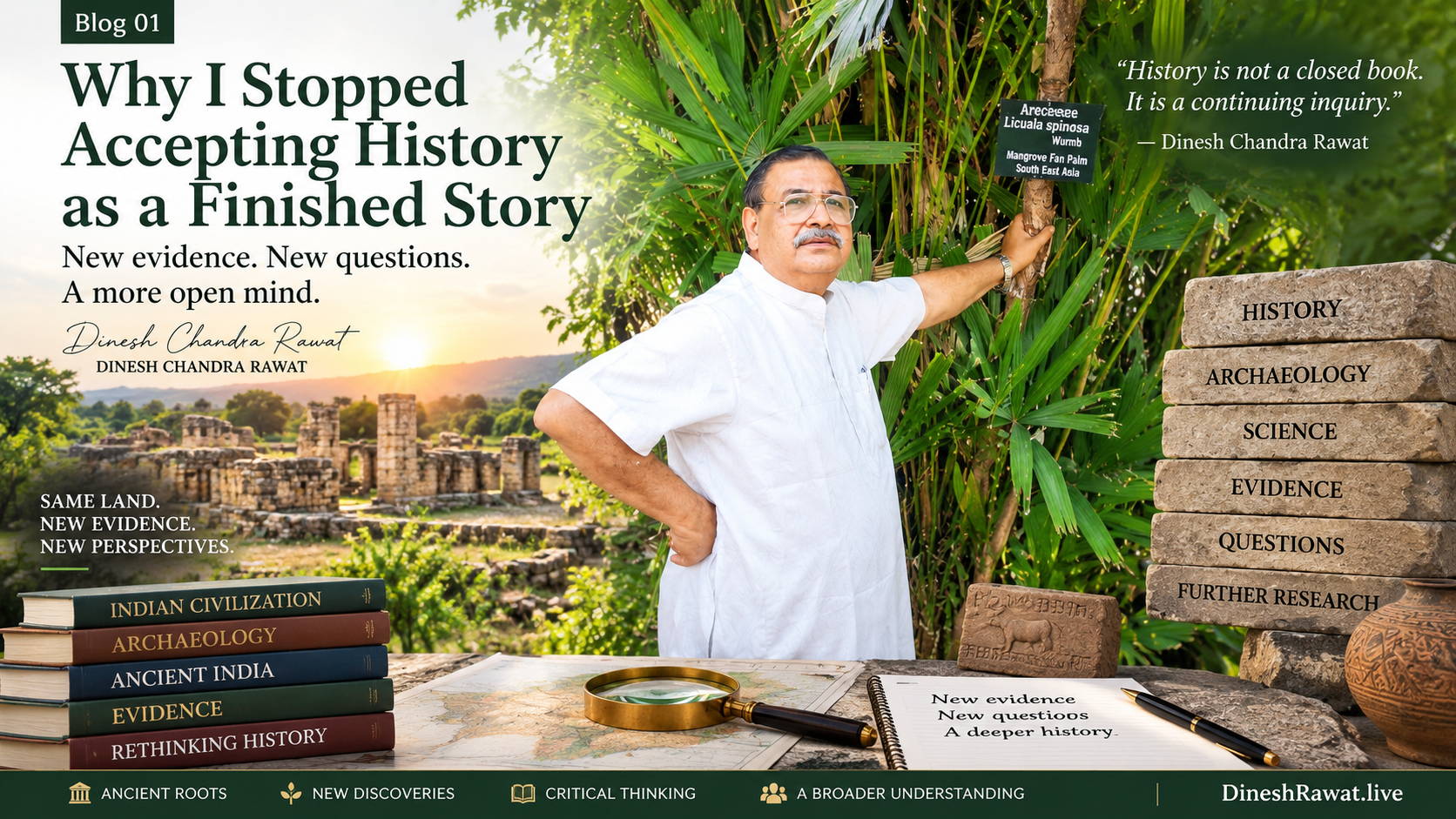
Why I Stopped Accepting History as a Finished Story
For much of our lives, we encounter history as something already completed.
A date is given. An event is described. A conclusion follows. We learn it, remember it and move forward.
Over the years, I became increasingly uncomfortable with that relationship with the past.
My change did not come from one book or one discovery. It developed gradually through reading, travelling, visiting historical places and comparing what I had been taught with what I could actually see.
I Once Read History Differently
Like most people, I initially approached history through books. Books remain indispensable, but eventually I realised that a textbook is not history itself.
It is an interpretation of evidence selected by authors working within the knowledge and assumptions of their time.
That distinction changed my approach.
- What evidence supports this conclusion?
- What evidence might complicate it?
- What did earlier scholars know when this interpretation was formed?
- What has archaeology discovered since then?
Those questions opened an entirely different journey.
The Difference Between Reading and Investigating
Reading gives us information. Investigation forces us to compare information.
When I began travelling to historical sites, I found myself looking at geography, settlement patterns, structures, local traditions and archaeological remains alongside written accounts.
Sometimes they supported what I had read. Sometimes they added complexity. And occasionally they made me wonder whether an old explanation had survived mainly because generations had repeated it.
This is an important distinction. Questioning an interpretation does not automatically prove an alternative interpretation correct. It simply means that the evidence deserves another examination.
What Historical Sites Taught Me
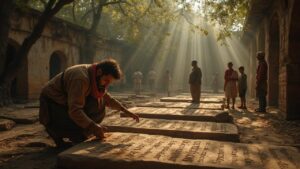
A site changes the way one thinks.
A map can show where an ancient settlement stood. Standing there makes you ask why people selected that particular landscape.
A book can describe an ancient water system. Seeing the reservoirs and channels of Dholavira forces you to think about the planning, organisation and environmental knowledge required to build them.
UNESCO describes Dholavira as an outstanding example of Harappan urban planning, including sophisticated reservoirs and drainage systems. Read the UNESCO World Heritage description.
The archaeological site becomes a question in stone: What did these people know?
Questions Are Not the Enemy of History
This is where I believe historical education sometimes makes a mistake.
Students are often trained to remember answers before they have learned how to ask questions.
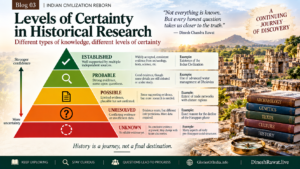
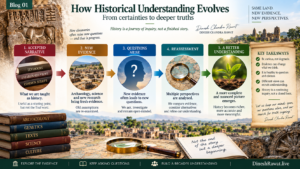
But scholarship advances precisely because conclusions are revisited.
New excavations appear. Dating methods improve. Ancient DNA adds another kind of evidence. Satellite imagery reveals landscapes invisible from the ground.
History therefore cannot be a permanently closed file.
Evidence Must Also Challenge What We Want to Believe
There is another danger.
When people discover that some older historical interpretations deserve reconsideration, they can move too far in the opposite direction. Every attractive claim about ancient India is not automatically true.
That does our civilization no service.
If evidence contradicts something I would like to believe, the evidence still deserves attention.
Civilizational confidence should be strong enough to tolerate investigation.
Why I Wrote Stop Teaching Rotten History
This concern lies behind Stop Teaching Rotten History.
The title is deliberately provocative, but the deeper argument is not that one interpretation should simply be replaced by another dogma.
It is that young people deserve to understand how historical knowledge is constructed.
They should encounter archaeology, texts, geography, scientific dating and competing interpretations.
Most importantly, they should learn to distinguish evidence from assertion.
From Questioning Textbooks to Re-examining Civilization
That question has gradually led into the wider work represented by Indian Civilization Reborn and my books and research, and the Glories of India research programme.
The objective is becoming larger than correcting individual historical claims.
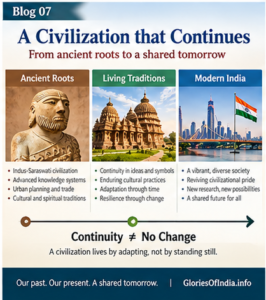
It is to ask what happens when India’s archaeology, knowledge systems, geography, literature and living traditions are studied together rather than as disconnected subjects.
I do not expect every reader to reach the same conclusions that I do.
“Do not ask first what you are expected to believe. Ask what the evidence allows you to conclude.”
The Journey Continues
After decades of investigation, I have more questions today, not fewer.
I regard that as progress.
History becomes more interesting when it ceases to be a collection of predetermined answers.
It becomes an investigation.
And perhaps that is how we should teach it.
Key Takeaways
- History is interpretation built from evidence, not an immutable collection of answers.
- Archaeological sites can challenge assumptions formed only through books.
- Questioning an established interpretation does not automatically validate an alternative one.
- Evidence should be applied equally to claims we welcome and claims we dislike.
- Stop Teaching Rotten History ultimately argues for better historical inquiry, not merely a different set of conclusions.
Continue Exploring
On DineshRawat.live: Books and Research by Dinesh Chandra Rawat · Stop Teaching Rotten History and Other Books
Companion reading: Why Is Indian History So Controversial? on GloriesOfIndia.info.
Frequently Asked Questions
Why should established history be questioned?
Because new archaeological and scientific evidence can refine older interpretations.
Does questioning history mean rejecting textbooks?
No. It means treating textbooks as starting points rather than unquestionable final authorities.
What is the central idea of Stop Teaching Rotten History?
Students should encounter evidence, competing interpretations and the process by which historical conclusions are formed.
Continue the Investigation
Read Stop Teaching Rotten History if you believe the next generation should learn not only what history says, but how we know. Then continue into Indian Civilization Reborn for the larger civilizational investigation.