 Why I Wrote 104 Years of Jesus in India: A Personal Journey of Enquiry
By Dinesh Chandra Rawat
On 15 November 2026, we plan to launch the print edition of my book, 104 Years of Jesus in India. With printed copies expected on 14 November and the Kindle edition already published, this is a meaningful moment in my journey as an author and independent history researcher.
For me, the book began with questions: What do we know about the less-documented periods of Jesus’s life? What should we make of accounts connecting him with India? How can we examine those accounts thoughtfully, recognising both their possibilities and their limitations?
This book presents my attempt to investigate those questions.
A Life Shaped by Observation
Gardening and historical research may appear to be very different pursuits. In my life, both have encouraged patient observation.
Working with plants teaches us to look closely, recognise conditions and resist quick conclusions. Historical enquiry also requires patience: reading a passage in context, comparing accounts and asking whether an interpretation is supported by the material before us.
Over more than thirty-five years of exploring history, I have studied books, visited places, spoken with local people and met researchers. Those experiences have strengthened my desire to examine how we understand the past—and how much remains open to investigation.
How the Questions Led Me to Kashmir
An important stage in this enquiry was my 2011 visit to Srinagar and Pahalgam, during which I met Dr. Fida Hassnain.
He gave me four books, including a signed volume. Our discussions and those publications became reference points in my continuing study of the Jesus-in-India question.
The encounter mattered because it connected my reading with a researcher who had devoted considerable attention to the subject. It gave me more material to examine and further questions to pursue.
My photographs and the books from that visit document this personal research journey. They establish the encounter itself; the ancient historical claims must still be assessed through their own evidence.
From Collected Material to a Book
Writing 104 Years of Jesus in India required bringing different kinds of material into conversation: textual references, reported journeys, regional traditions and interpretations developed by earlier writers.
The book examines subjects including the accounts associated with Nicolas Notovitch and Hemis Monastery, a passage in the Bhavishya Purana, and Kashmir traditions surrounding Rozabal.
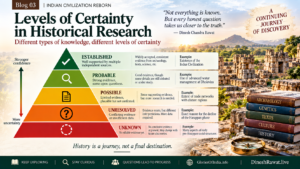
These subjects raise difficult questions. When was an account recorded? Can it be independently corroborated? Does a text support the meaning attributed to it? Could a tradition have developed long after the events it describes?
Such questions belong within the investigation. A compelling story deserves careful examination precisely because it can capture our imagination.
Understanding the Title
The title, 104 Years of Jesus in India, expresses the reconstruction proposed in my book.
It begins with a lifespan of 120 years, subtracts thirteen years associated with the Essenes and three years of public ministry, and assigns the remaining 104 years to India.
This is my proposed reconstruction, rather than an established scholarly chronology. The arithmetic explains the title; the historical assumptions behind it require separate examination.
I ask readers to assess the argument through the sources, interpretations and uncertainties discussed in the book.
What I Hope Readers Will Take Away
My hope is that readers will approach this work with curiosity and independent judgement.
Some may find the reconstruction persuasive. Others may disagree with particular interpretations or question the reliability of a source. A thoughtful response should explain where the evidence supports an argument and where it falls short.
Jesus holds profound spiritual significance for people around the world. I approach this enquiry with respect for that significance and for readers whose beliefs and conclusions may differ from mine.
For me, publishing the book opens a conversation in which questions, criticism and further research all have a place.
The Print Edition Launch
The print edition is scheduled to launch on 15 November 2026, following the expected arrival of copies on 14 November. The Kindle edition is already available on Amazon.
I look forward to placing the book in the hands of readers who wish to study its arguments, revisit its references and form their own conclusions.
For book availability and publication updates, visit Glories of India Publications.
For reading-group discussions, interviews or invitations to speak about my research, write to greenmiracleman@gmail.com.
— Dinesh Chandra Rawat
Author, Environmentalist and Independent History Researcher